innovation
transformation
markets
Reflections on Post-it Notes Inventor Talk

Matt Bjornson
12 Feb 2025
Reflections on Post it Notes Inventor Talk
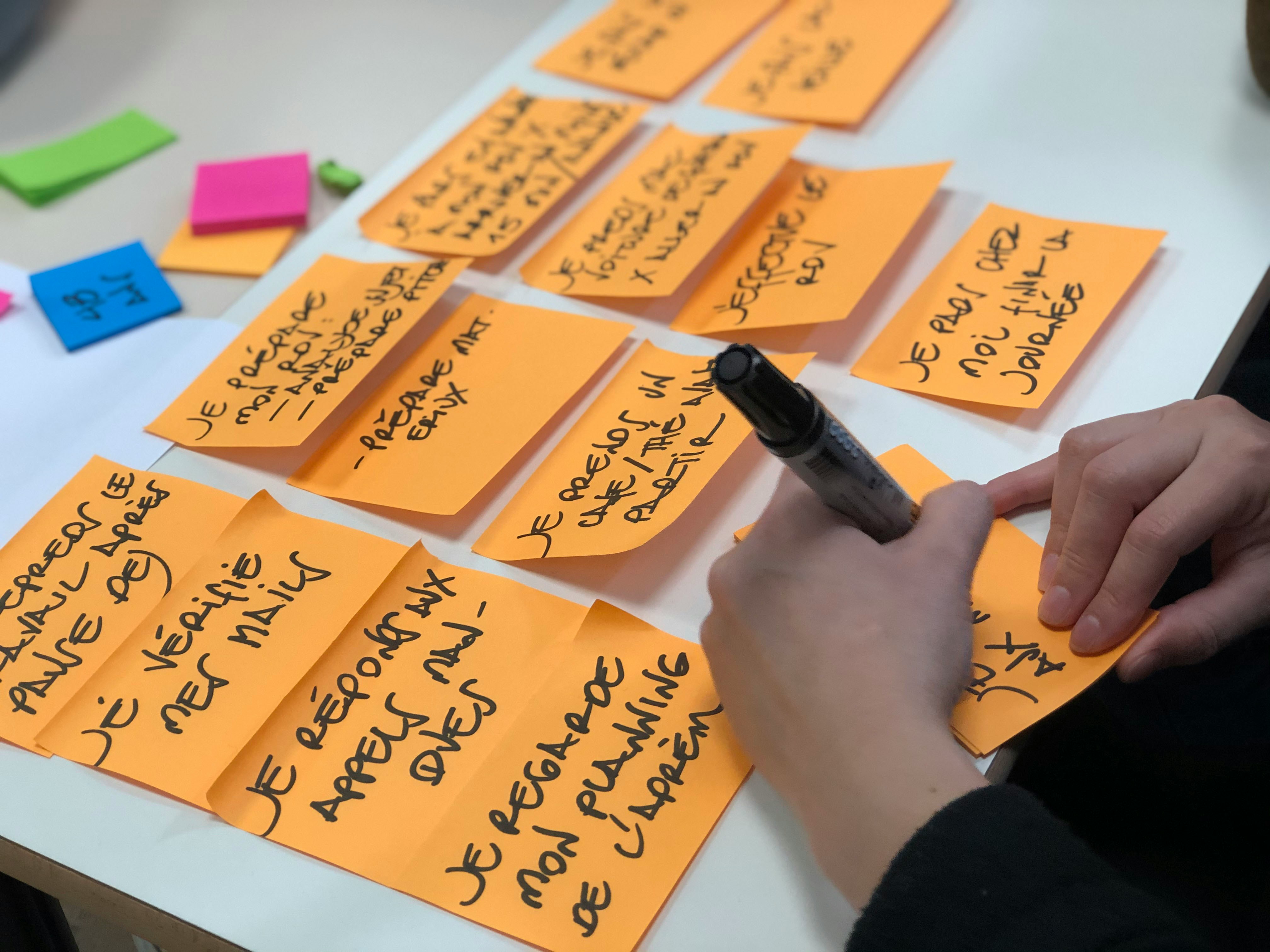
There are few professional people who haven't used or know what a Post It note is. In product teams, they are commonly used to map solutions, affinity map to synthesize and much more. I was fortunate enough to be invited to a talk that Art Fry, inventor of Post It Notes, gave to a small group of professionals focused on innovation.
Here are a few important notes from that talk and in our discussions.
- Importance of the company culture upon innovation
- Characteristics of innovators
Importance of the company culture upon innovation
Art indicated that this is a critical component.
He started working on Post It Notes starting in 1973-1974 part time. This is when 3M had an ambition to have 15% of revenues come from new products.
As a result of this policy, many within 3M were allowed to spend 15-20% of their time each week on development new products.
He was in the Office products area and was trying to identify opportunities. He found inspiration in a church hymnal and wanted to mark the page for the various hymns that would be sung.
But it couldn't ruin the page when the mark was removed. The adhesive needed to be strong enough to stick to paper, but not too strong that it'd destroy the page it was stuck to.
This lead Art to research the many adhesives that 3M's teams had created.
He moved into a lab focused on new products and continued to prototype and iterate. The rest, as they say, is history.
With out 3M's knowledge and extensive R&D into adhesives, it's doubtful they could have pulled this off.
Case in point, many competing firms have tried to introduce a competitor to Post It Notes, but the adhesive wasn't quite right resulting in the notes falling from the pages.
I asked Art if he thought 3M could still create new breakthrough products like Post It Notes and he emphatically said 'no'.
I suspected this was the case, but also thought I could be biased.
He said that the culture is completely different now.
The ambition of 15% of revenues coming from new products was gone.
The free time that allows people to work on new ideas is gone.
3M no longer hired people who were inventors or innovators, they now hire operators.
Characteristics of innovators
More than operators or innovators, I asked what are the characteristics of successful innovators.
Art indicated that the individual needs to have curiosity.
They need to want to understand how things work and why they don't.
They are builders, and not just the individual product, but they also need to understand the 'business' side of the product.
What does the operations and distribution channels look like to support this product?
I would interject here that while Art didn't specifically say as much, it seems that persistence would be the sister attribute needed to curiosity.
Or, at least, it was implied in what he said. You can't just give up after the first few attempts. ( Queue the Edison quote about finding 10,000 ways to NOT make a lightbulb).
Heavy weight process and theatrics around the OKR cycle
OKRs are a tool to help the team, portfolio and organization to determine progress against broader goals.
They should be thought of milestones on the way to a 10x organization goal/outcome.
Use them to troubleshoot, not to punish.
Too often, at the end of the OKR cycle, there's a 'scoring' ceremony to determine what teams met or didn't their OKRs.
If our OKRs are meant to be achieved, versus going after a 10x outcome, how is this helping the team(s), and by proxy the organization make progress on meaningful organizational goals?
It's not. It's pure theater, it's about process and fake 'accountability'.
Teams therefore sandbag OKRs to what they know they can deliver each OKR.
Ultimately, this causes mediocre results and poor organizational performance.
This causes teams to focus on delivery OKRs. Not the right culture, mindset, and tool for delivery.
All this theater has spawned the need for 'OKR Coaches'.
More process, more waste.
The slippery slope to mediocrity.
What to do?
Anchor to what OKRs were intended to be: a tool to help focus teams/portfolio/organizations on 10x outcomes.
This requires empowerment of portfolios and teams to build a strategy and how to execute toward the broader organizational outcomes.
Empowerment is a buzzword that most organizations do NOT have as part of their culture.
This takes leadership to change and model new behaviors, which takes time and effort.
Don't accept 'accomplishment OKRs' these are the fastest path to delivery focus and mediocrity.
Look at adopting a cohesive, holistic Product Operating Model and not just a 'bolt on' of tools that a vendor said to.
What do you think? What did we miss or get wrong?
Matt Bjornson
CEO / Founder
Helping companies grow through innovation and Jobs-to-be-Done methodology.